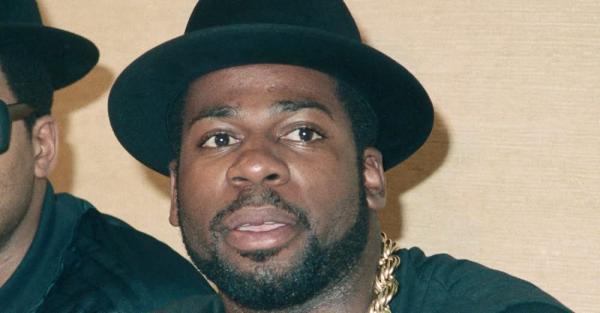
Jam Master Jay Death, Obituary; Nearly 25 years after the shocking murder of Run-DMC DJ Jam Master Jay, a major development has emerged in one of hip-hop’s most enduring cold cases, as Jay Bryant, 52, has pleaded guilty to his role in the killing.
Bryant entered the guilty plea in federal court on Monday, admitting that he helped others gain access to the recording studio where Jason Mizell, known worldwide as Jam Master Jay, was fatally ambushed in October 2002. In his testimony before a federal magistrate, Bryant acknowledged knowing a firearm would be used and stated that he understood his actions were criminal.
Support the Family
In lieu of flowers, your kind contribution will help the family during this difficult time. Every gesture of support brings comfort and shows you care. Your generosity is deeply appreciated.
Donate NowThank you for your support and love during this time.
“I knew a gun was going to be used to shoot Jason Mizell,” Bryant told the court. “I knew that what I was doing was wrong and a crime.”
While Bryant did not identify the individuals he worked with, prosecutors have previously linked the case to others already tried in connection with the killing. In 2024, Karl Jordan Jr. and Ronald Washington were convicted in relation to Mizell’s death, though legal challenges have since complicated the outcomes, including a ruling that cleared Jordan after his conviction. Washington has also continued to contest his verdict.
Jam Master Jay, born Jason Mizell, was a founding member of Run-DMC alongside Darryl “DMC” McDaniels and Joseph “Run” Simmons. The group became one of the most influential acts in hip-hop history, helping push rap music into mainstream global recognition with iconic hits such as “It’s Tricky,” “My Adidas,” and “Walk This Way.” Their success made Run-DMC the first rap group to earn gold and platinum albums and appear on the cover of *Rolling Stone*, eventually leading to their induction into the Rock & Roll Hall of Fame in 2009.
Mizell was just 37 years old when he was shot inside his Queens recording studio, a place in the neighborhood where he grew up. His death in 2002 followed a turbulent period in hip-hop marked by the killings of Tupac Shakur and The Notorious B.I.G., both of which also remained unsolved for years.
Federal prosecutors have long alleged that the killing stemmed from a dispute involving a failed cocaine deal. Though Run-DMC was widely known for promoting anti-drug messages, investigators and trial testimony suggested Mizell may have been involved in drug-related activity in later years to help support himself and others financially.
Bryant was later linked to the case through DNA evidence reportedly found on a hat recovered at the scene, along with surveillance indications placing him near the studio. He was already in federal custody on separate drug and firearm charges when he was added to the murder indictment.
Prosecutors allege Bryant’s role was to assist in gaining entry to the building, allowing the armed individuals to access the studio without alerting Mizell. Authorities say the attack involved coordination between multiple people, though Bryant did not directly identify who carried out the shooting during his plea.
With Bryant’s admission, investigators say another piece of the decades-long puzzle has fallen into place, though questions remain about the full sequence of events and all individuals involved.
Jam Master Jay’s legacy, meanwhile, continues to loom large over music history. As a pioneering figure in hip-hop, his influence on the genre and generations of artists remains undeniable, even as his murder continues to carry echoes of unresolved pain and complexity more than two decades later.